Fudge vs. Chocolate: What's the Difference—and Which Should You Choose?
Fudge vs. Chocolate: What's the Difference—and Which Should You Choose?

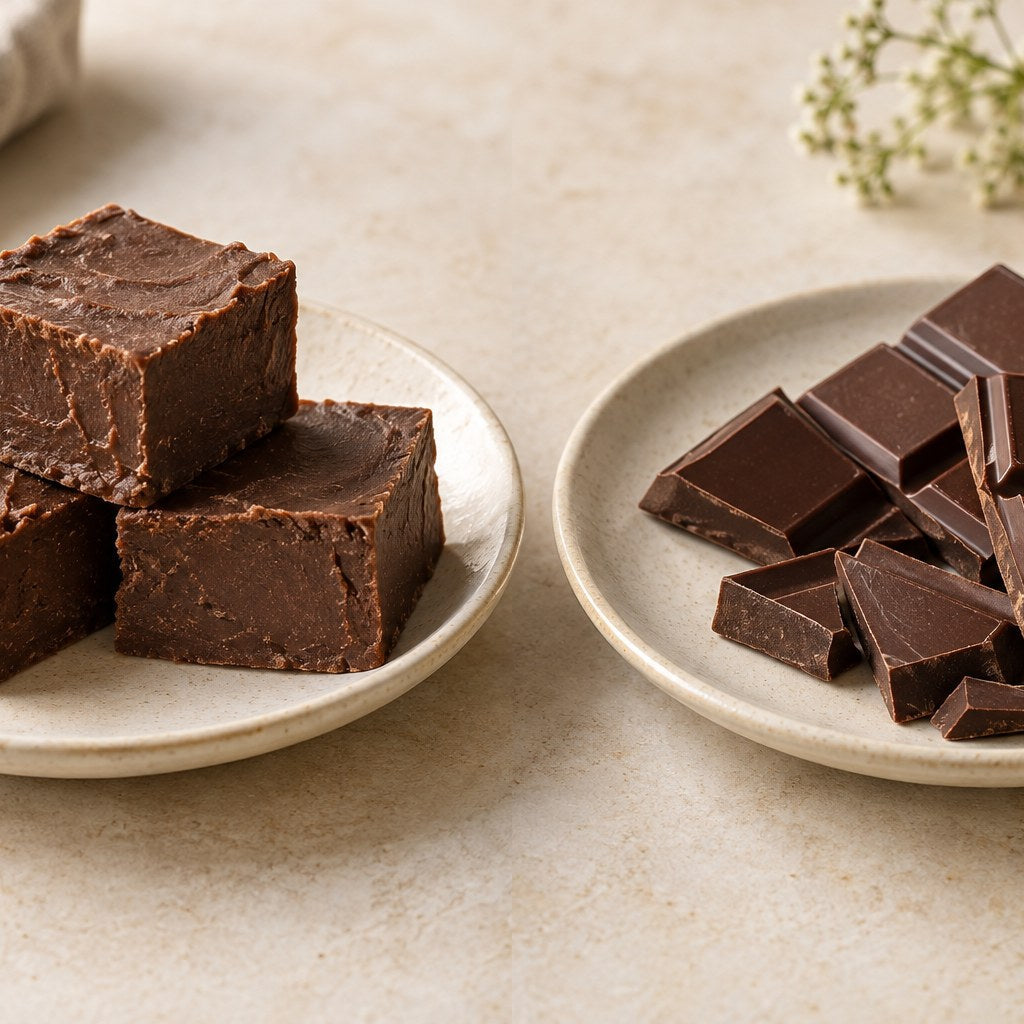
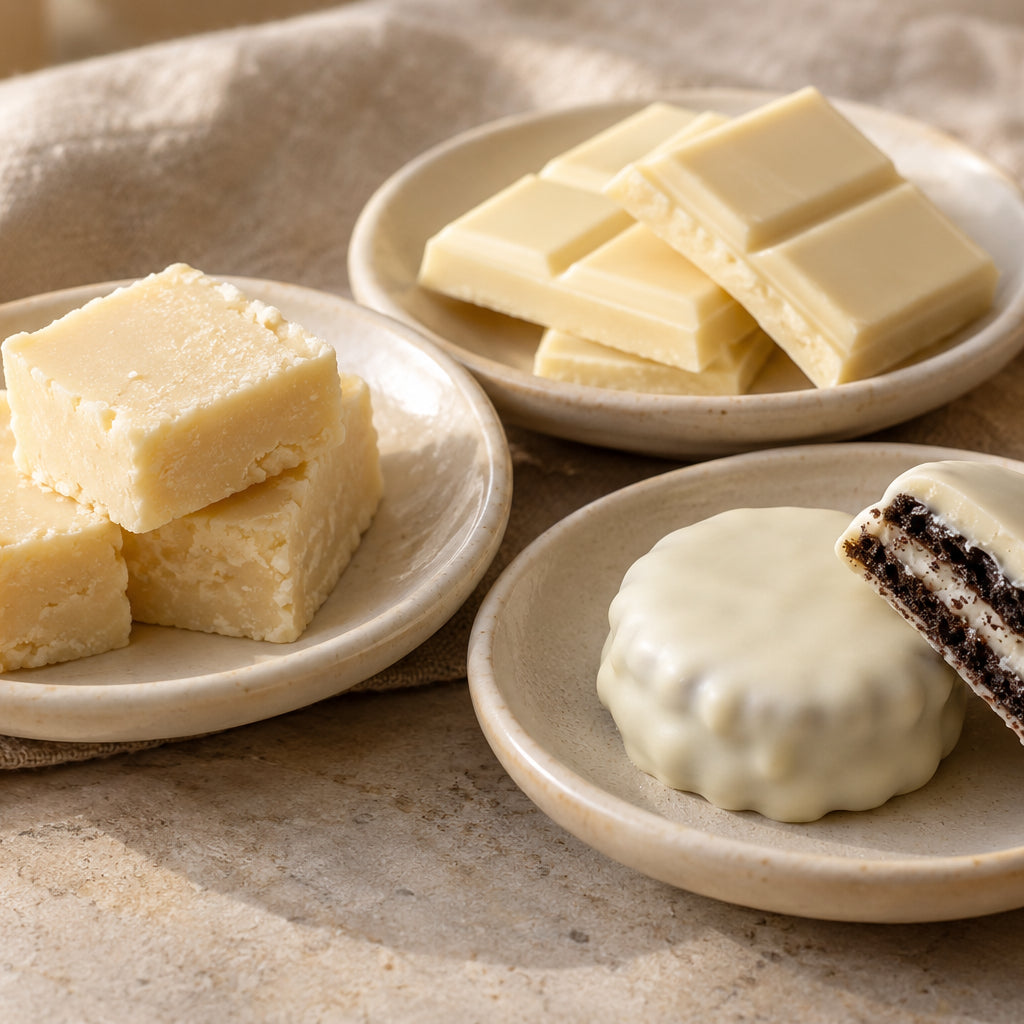
A square of chocolate fudge and a piece of a chocolate bar can look remarkably similar. Bite into them, though, and the difference becomes much easier to understand. A plain bar usually breaks firmly; fudge is generally softer and easier to cut into small pieces.
Fudge is a confection made in a range of flavors, often using sugar, dairy and butter. Chocolate is a cocoa-derived food that can be eaten as a bar or used as an ingredient in other sweets—including fudge. Chocolate fudge contains chocolate or cocoa flavoring, but fudge does not have to be chocolate-flavored.
The important distinction is the finished product. Fudge and a plain chocolate bar can share ingredients while delivering different textures, flavors and uses.
Fudge and chocolate at a glance
For this comparison, “chocolate” means a plain chocolate bar. Filled chocolates and chocolate-coated fudge can combine several textures in the same bite.
| Question | Fudge | Plain chocolate bar |
|---|---|---|
| What is it? | A confection with several recipe styles | A cocoa-derived product formed into a bar |
| What texture should you expect? | Generally soft and sliceable; some styles are more crumbly | Usually firmer, with texture affected by formulation and temperature |
| Does it have to taste like chocolate? | No; flavor possibilities extend beyond chocolate | Cocoa ingredients underpin dark and milk chocolate; white chocolate uses cocoa butter |
| How is it made? | Traditional recipes cook a sugar mixture; quick versions can use chocolate and condensed milk | Chocolate is processed and formed; tempering controls cocoa-butter crystallization |
| What should a buyer check? | Flavor, ingredients, weight and storage instructions | Chocolate type, ingredients, weight and storage instructions |
Neither name tells you everything about a product. A fudge labeled “dark chocolate” is still a fudge recipe; it should not be assumed to have the same cocoa percentage, sweetness or composition as a dark chocolate bar.
What is fudge made of?
There is more than one way to make fudge. That explains why two recipes carrying the same name may use different ingredients and techniques.
Traditional cooked-sugar fudge
Traditional fudge recipes cook a sugar mixture, then cool and work it to develop the desired texture. The Exploratorium explains that small sugar crystals give this style of fudge structure while remaining too small to feel noticeably grainy. Larger crystals can make it feel gritty. Exploratorium's fudge science
This is a useful distinction: smooth traditional fudge is not simply candy with no sugar crystals. The size of those crystals matters.
Quick condensed-milk fudge
Other recipes take a different route. King Arthur Baking's microwave fudge combines chocolate, sweetened condensed milk, butter and vanilla, then chills the mixture before cutting. It does not use the same cooked-sugar sequence as traditional fudge. King Arthur's microwave fudge
Both styles appear under the name fudge. If the method matters to you, ask the maker rather than guessing from a photograph or assuming every shop uses the same process.
Why does fudge feel different from a chocolate bar?
In traditional fudge, the sugar mixture and its crystal structure are central to the texture. In tempered chocolate, the crystal structure of cocoa butter is important.
Guittard describes tempering as controlled cooling and movement that creates stable cocoa-butter crystals. Its method includes checking that the chocolate sets with a uniform sheen. Guittard's tempering explanation
For a shopper, the practical result is a different bite. A plain bar usually feels firmer at a suitable serving temperature; fudge usually gives way more easily. Nuts, cookie pieces, fillings and other additions can introduce crunch or chew to either.
Temperature also changes the experience. A warm chocolate bar will not behave like a cool one, so appearance or firmness alone cannot identify a recipe or establish product quality.
Does fudge have to contain chocolate?
No. Chocolate is one flavor direction, rather than a requirement for every fudge.
King Arthur Baking's collection includes stovetop peanut butter fudge alongside chocolate versions. It is a concrete example of fudge extending beyond chocolate. King Arthur's basic fudge recipes
That gives fudge buyers more ways to start with something they already enjoy. Someone who likes chocolate desserts might begin with a chocolate variety. Someone drawn to buttery or peanut-butter treats can explore a different flavor family.
Check the actual ingredient information, however. A non-chocolate flavor name does not automatically mean a product contains no cocoa-derived ingredients, dairy or allergens. Flavor descriptions tell you what a maker intends the product to taste like; labels tell you what is in it.
Which should you choose?
Start with the eating experience you want.
Choose a plain chocolate bar when you want a firmer bite
If what you enjoy is breaking off a piece of a bar, compare chocolate types and product descriptions. Dark, milk and white chocolate offer different experiences, and individual formulations vary within each group.
Choose fudge when you want a softer confection
Fudge is worth exploring if you enjoy a sliceable sweet or want flavor choices that extend beyond chocolate. It can be portioned for a small tasting selection, with each flavor kept identifiable.
For a chocolate enthusiast, a chocolate fudge can be a familiar starting point. For someone who prefers other dessert flavors, look beyond chocolate and read the available descriptions before choosing.
For a gift, use what you know about the recipient
Remember the dessert they actually order or the sweet they regularly choose. One favorite repeated can be more thoughtful than a large assortment selected only for variety.
Before buying, check four things:
- Flavor preference: are you choosing something they like or something you happen to find interesting?
- Ingredients: confirm dietary needs and allergens with the maker and recipient.
- Quantity: compare total product weight, not just photographs or the number of flavors.
- Handling and timing: read the maker's storage instructions and confirm arrangements if the gift is needed for a specific date.
There is no universal answer to which is healthier, sweeter or better value. Those comparisons require the actual product labels, comparable portions and current prices. The category name alone is not enough.
Can you substitute fudge for chocolate in a recipe?
Do not assume they are interchangeable. Fudge can bring additional sugar, dairy, fat and moisture into a recipe, and different styles set differently. A recipe that calls for baking chocolate or chocolate chips may depend on those ingredients for its result.
If you want to bake with fudge, choose a recipe that specifically calls for it. If you are comparing sweets to eat, the decision is simpler: choose the texture and flavor you enjoy.
Find a flavor that fits your preferences


Touch of Fudge makes small-batch fudge in Kentucky. Its range gives you a place to explore the distinction for yourself: begin with Dark Chocolate fudge, consider a different direction such as Butterscotch fudge, or browse the current selection.
Choose your flavors with Build Your Box. Review the current descriptions, ingredients, weights and availability as you select. If you are choosing for someone else, our fudge gift guide offers ideas for matching the gift to the occasion.
Frequently asked questions
Is fudge the same as chocolate?
No. Fudge is a confection with several recipe styles. Chocolate is a cocoa-derived food that can be used to make fudge. Chocolate fudge and a plain chocolate bar can share ingredients but differ in composition and texture.
Can fudge be made without chocolate?
Yes. Peanut butter fudge is one example. Check each product's ingredient list rather than assuming a non-chocolate flavor name means it contains no cocoa-derived ingredients.
Why is fudge softer than a chocolate bar?
Their formulations and structures differ. Traditional fudge develops a fine sugar-crystal structure; tempered chocolate relies on cocoa-butter crystallization. Texture also depends on recipe, mix-ins and serving temperature.
Is all fudge made by boiling sugar?
No. Traditional recipes cook a sugar mixture, while quick recipes can combine chocolate and sweetened condensed milk before cooling. Ask the maker if you want to know which method a particular product uses.
Is dark chocolate fudge the same as dark chocolate?
No. It is a fudge flavored with dark chocolate or cocoa ingredients. The name alone does not establish cocoa percentage, sugar content or equivalence to a plain dark chocolate bar. Review the product's own information.
Is fudge healthier than chocolate?
You cannot decide from the names alone. Compare the actual nutrition labels and equivalent portions. Ingredients and nutritional composition vary within both categories.
Can I replace chocolate chips with fudge?
Do not assume a direct swap will work. Fudge may introduce additional sugar, dairy, fat and moisture. Use a recipe designed for fudge or follow the recipe author's substitution advice.
Ready to taste the difference? Shop by Flavor.
Related post
12
Nov
12
Nov
25
Oct