What Is White Fudge? White Chocolate, Cookie Coatings, and the Sweet Confusion
What Is White Fudge? White Chocolate, Cookie Coatings, and the Sweet Confusion

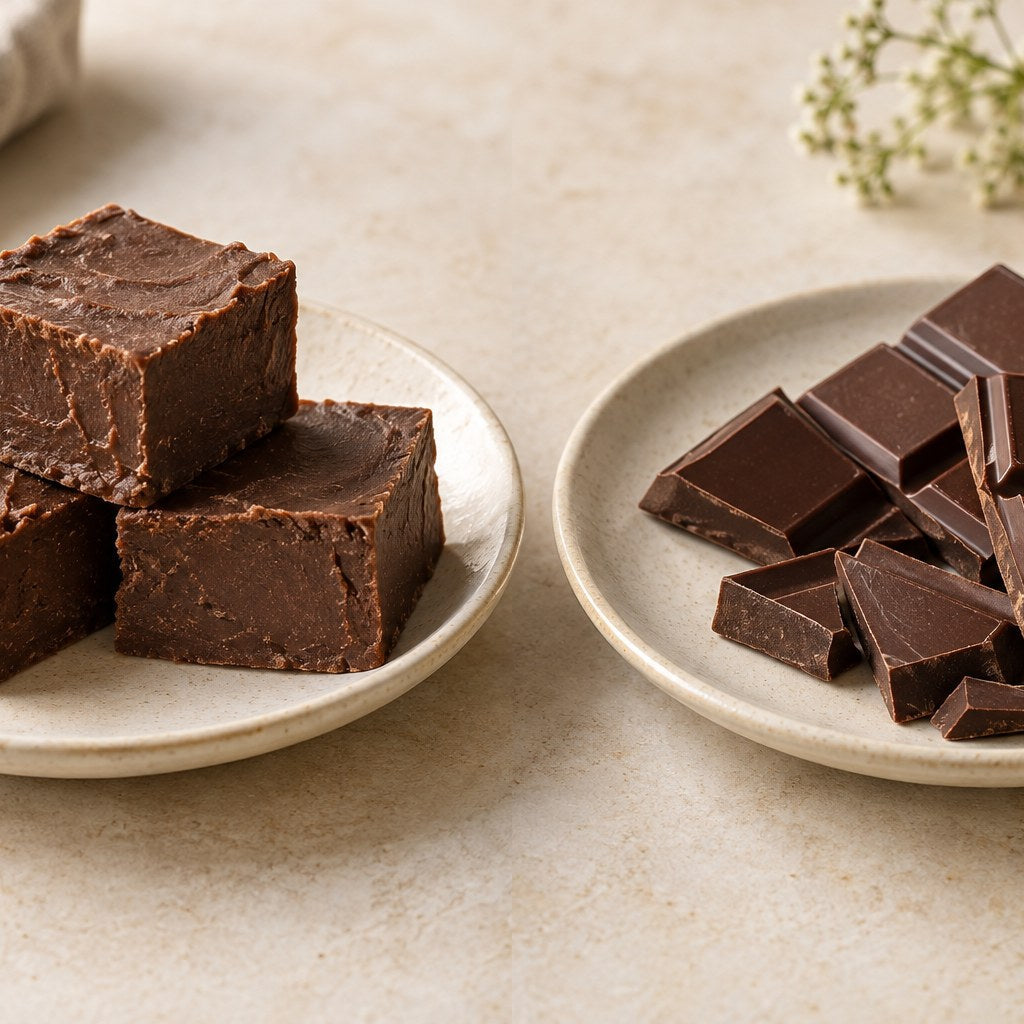
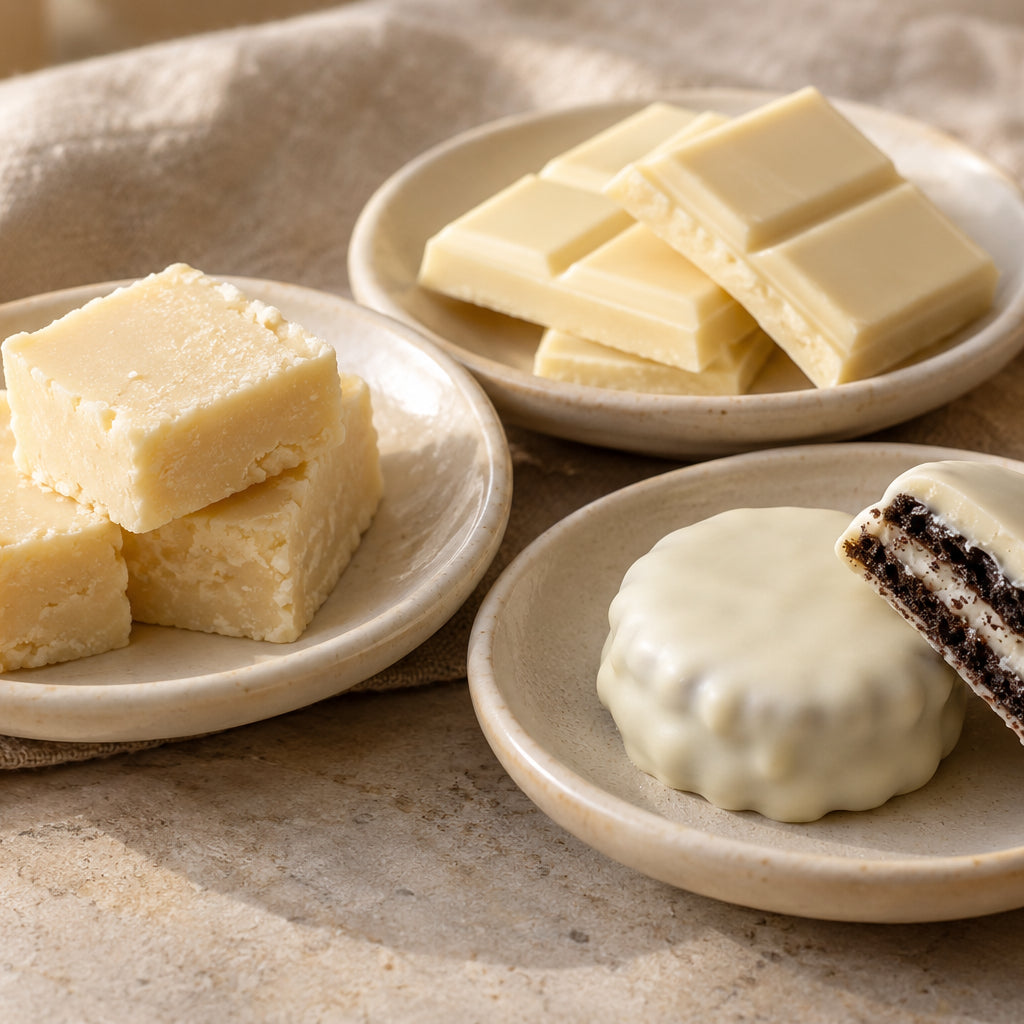
An ivory coating on a chocolate cookie. A creamy square in a confectionery box. A white chocolate bar snapped into pieces. They might share a color palette, but they are not interchangeable sweets.
That is where “white fudge” gets confusing. The name can point to a pale, sliceable confection or describe the coating on a packaged cookie. If you have ever wondered whether white fudge is simply white chocolate with a different name, the answer takes a little label reading.
White fudge and white chocolate are not automatically the same thing. White chocolate is a defined food category in the United States. “White fudge” needs context: a fudge recipe may contain white chocolate, while a product described as white-fudge-covered may use a different confectionery coating.
Here is how to tell what you are buying—and choose the sweet you actually want.
What is white fudge?
In a confectionery recipe, white fudge usually means a light-colored fudge rather than the familiar brown chocolate version. The ingredients and method vary. Some versions use white chocolate; others use confectioners coating. Vanilla and other additions can shape the flavor.
For a concrete example, Eagle Brand’s white chocolate fudge recipe combines white baking chocolate or confectioners coating with sweetened condensed milk. It is spread into a pan, chilled until firm, and cut into squares.
That example also explains why the name alone is not an ingredient list. Even a recipe titled “white chocolate fudge” can offer alternative ingredients. Read the recipe or product description before assuming what is inside.
On a cookie package, the words “white fudge” can instead describe a coating. The product is a coated cookie, rather than a standalone piece of fudge. Same phrase, different eating experience.
Is white fudge the same as white chocolate?
No. White chocolate can be an ingredient in fudge, but adding it to a fudge recipe does not make the finished confection identical to a plain white chocolate bar.
In the United States, 21 CFR 163.124 specifies the composition of white chocolate. It must contain at least 20% cacao fat, commonly called cocoa butter, at least 14% total milk solids, and at least 3.5% milkfat. The standard also sets other requirements.
Those percentages apply to white chocolate itself. They are not a formula for every dessert containing white chocolate, and they should not be used to guess the composition of a finished fudge or coated cookie.
The practical takeaway is simple: an ivory color and a sweet flavor do not establish that a product is white chocolate. The product name, ingredient information, and manufacturer’s description are more useful than appearance.
White fudge vs white chocolate vs white fudge coating
| What you are comparing | What it describes | What to check |
|---|---|---|
| White fudge | A pale fudge confection, with a recipe that varies | Whether the recipe uses white chocolate, confectioners coating, or another base |
| White chocolate | A chocolate category with a U.S. composition standard | The product designation and ingredient information |
| White fudge coating | A coating described that way by its manufacturer | The specific coating ingredients and the country’s product label |
| White chocolate fudge | Fudge made with white chocolate, although some recipes offer substitutions | The actual recipe or product description rather than the title alone |
Think of white chocolate and white chocolate fudge as an ingredient and a finished recipe. A plain bar gives you the chocolate on its own. Fudge combines ingredients to create a different confection.
What does white fudge covered mean on cookies?
“White fudge covered” tells you that a cookie has an outer coating described as white fudge. It does not, by itself, tell you that the coating is white chocolate or that it matches a traditional cooked fudge recipe.
Snackworks’ Canadian OREO White Fudge Covered Cookies page, for example, describes dipped cookies and lists palm and palm kernel oils among the ingredients. That is a specific Canadian product listing, not evidence that every package in every country has the same formulation.
It is also a whole-cookie ingredient list. Ingredients associated with the dark cookie should not automatically be attributed to the pale coating. To understand one component precisely, look for component-specific information or ask the manufacturer.
If you are shopping in the U.S., check the U.S. package in front of you. Recipes, labeling, and product ranges can differ across markets and change over time.
Why does fudge feel different from a chocolate bar?
The distinction becomes clearer when you take a bite. A plain white chocolate bar may have a firm break and then melt as you eat it. Fudge is generally a dense, sliceable confection, although its firmness and smoothness depend on the recipe and storage conditions.
Traditional cooked fudge has a particular bit of candy science behind it. The Exploratorium’s explanation of fudge describes how very small sugar crystals produce a smooth-feeling texture. Larger crystals can make that style of fudge feel grainy.
That explanation applies to traditional crystallized fudge. A condensed-milk shortcut recipe takes a different approach, so one method should not be treated as the manufacturing process for every fudge on the shelf.
For a broader comparison, our guide to fudge vs. chocolate explores how ingredients, texture, and flavor affect the choice.
How to choose the treat you will enjoy
Choose a white chocolate bar for a straightforward chocolate experience
If you want to taste white chocolate on its own, start with a product sold as white chocolate. Compare descriptions and ingredients, then decide whether you want a plain bar or additions such as fruit or nuts.
Choose fudge for a sliceable sweet with room for flavor discovery
If you enjoy trying dessert-inspired flavors, fudge offers a different way to explore. A small piece lets you compare one flavor with another without building an entire dessert around either.
At Touch of Fudge, the Cookies N Cream Cheesecake fudge is one option to explore if cookie-and-cream flavors caught your attention. It is a separate fudge product, not the same item as a white-fudge-covered cookie. Check the current product information and ask us about ingredients or dietary requirements before ordering.

Choose a coated cookie when you want the cookie as part of the bite
A coating adds another layer to the wafer and filling underneath. If the contrast between a cookie and its coating is what appeals to you, look for a coated cookie rather than expecting a plain fudge square to deliver the same experience.
For a gift, start with what the recipient already enjoys. Someone who loves a creamy confection may prefer fudge; someone who always reaches for biscuits may enjoy coated cookies. Preferences are more useful than deciding which category is supposedly “better.”
Try a simple side by side tasting
Put a small piece of white chocolate, a piece of pale fudge, and a coated cookie on separate parts of a plate. Keep their packaging or product information nearby so you can connect what you taste with what each item actually is.
Take a bite of each and notice three things: the first bite, how the texture changes in your mouth, and the flavor that remains afterward. Water between samples can help you approach the next one afresh.
For a group, keep each item identifiable and retain ingredient and allergen information. Do not infer that a pale sweet is free of cocoa ingredients, dairy, or other allergens because of its color.
There is no winning plate to assemble. The useful discovery is whether you prefer a clean chocolate bite, a sliceable confection, or a cookie with an extra layer.
Ready to find your next favorite? Explore Touch of Fudge flavors and choose the descriptions that match your kind of sweet.
Frequently asked questions
Does white fudge contain white chocolate?
Some recipes do. Others use confectioners coating or a different base. The phrase “white fudge” alone does not confirm the ingredients, so check the specific recipe or product information.
Is white fudge just vanilla fudge?
Not necessarily. “White” describes appearance, while “vanilla” describes a flavor. A light-colored fudge may be vanilla-flavored, but the terms do not establish the same recipe.
Is white chocolate real chocolate?
White chocolate is a recognized food category under the U.S. standard in 21 CFR 163.124. It contains cocoa butter and must meet specified composition requirements. Its pale color does not mean it is unrelated to cacao.
Are white fudge covered cookies the same as white chocolate covered cookies?
Do not assume they are. A manufacturer may use different ingredients for a white fudge coating. Read the specific package or manufacturer’s description rather than treating the names as interchangeable.
Can I replace white chocolate with white fudge in a recipe?
Do not treat them as a direct swap. Finished fudge contains a mixture of ingredients that can change how a recipe sets or bakes. Follow a tested recipe using the type of chocolate or coating it specifies.
Which is sweeter white fudge or white chocolate?
There is no universal answer. Recipes and serving sizes differ. Compare the specific products’ nutrition information on the same weight basis if sugar content matters to your choice.
Related post
12
Nov
12
Nov
25
Oct